
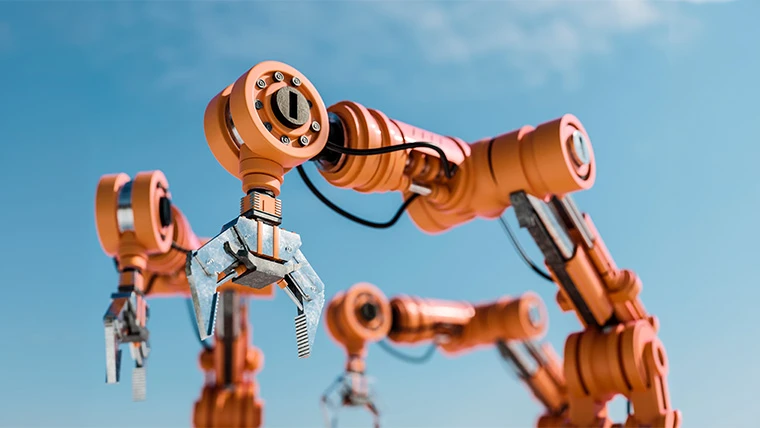
Industrial Automation Trends Shaping Hong Kong’s Future
Hong Kong has long been defined by its ability to adapt — from entrepot trade to financial services, from light manufacturing to logistics excellence. Today, a new transformation is underway. As Hong Kong deepens its integration with the Greater Bay Area and faces mounting competitive pressure from across the region and the globe, industrial automation is emerging as one of the most critical levers for future growth, resilience, and relevance.
Here are the key industrial automation trends that are shaping Hong Kong’s industrial future right now — and what they mean for businesses operating in the region.
1. AI-Powered Machine Vision and Quality Control
Artificial intelligence is transforming what machine vision systems can do. Where traditional vision systems were programmed with fixed rules to detect specific defects, AI-powered vision systems can learn from examples, adapt to new products, and identify complex or variable defects that rule-based systems would miss.
For Hong Kong manufacturers — particularly in electronics, pharmaceuticals, and premium consumer goods — AI vision systems offer a step-change in inspection capability. They can handle high product variety, cope with subtle quality variations, and continuously improve their accuracy over time as they are exposed to more data.
In 2025 and beyond, AI-powered quality inspection is no longer a frontier technology. It is becoming the expected standard for manufacturers supplying premium and regulated markets — and Hong Kong businesses that embrace it early will have a meaningful competitive advantage.
2. GBA Integration Driving Automation Investment
The Greater Bay Area initiative continues to reshape the industrial geography of southern China. As Hong Kong-based companies expand operations into Shenzhen, Guangzhou, Dongguan, and other GBA cities, they are confronted with the scale and pace of manufacturing in these markets — and the automation levels that their GBA-based competitors and partners are deploying.
This exposure is accelerating automation investment among Hong Kong businesses. Companies are recognising that to compete effectively within the GBA ecosystem, they need production processes that match the efficiency, quality, and speed of the region’s most advanced manufacturers.
The GBA is not just a market opportunity for Hong Kong — it is a competitive benchmark. Businesses that automate will be better positioned to win contracts, partnerships, and investment within this dynamic ecosystem.
3. Smart Sensors and the Industrial Internet of Things (IIoT)
Across the GBA’s factory floors, intelligent sensors are proliferating — measuring temperature, pressure, vibration, position, flow, and dozens of other parameters in real time. These sensors feed continuous data streams to central monitoring platforms, enabling predictive maintenance, process optimisation, and real-time quality management.
For Hong Kong businesses operating production facilities in the GBA, IIoT connectivity means remote visibility into their operations — the ability to monitor performance, detect anomalies, and respond to issues from a Hong Kong office or from anywhere in the world.
The convergence of smart sensors, wireless connectivity, cloud computing, and data analytics is creating what many call the ‘smart factory’ — and Hong Kong’s role as a technology and services hub positions it well to both adopt and help develop these capabilities.
4. Collaborative Robotics (Cobots) in Smaller Operations
Industrial robots have traditionally been the domain of large-scale manufacturers with deep capital budgets — automotive plants, electronics mega-factories, and the like. But the rise of collaborative robots, or cobots, is changing this dynamic.
Cobots are designed to work safely alongside humans, are relatively easy to programme and redeploy, and are available at price points accessible to small and medium-sized enterprises. In Hong Kong’s business landscape — dominated by SMEs — this is significant.
We are seeing growing cobot adoption in:
- Light assembly and packaging operations
- Pick-and-place tasks in warehousing and logistics
- Inspection and testing workflows
- Material handling in food and beverage production
For Hong Kong businesses looking to reduce dependence on manual labour, improve consistency, and manage rising workforce costs, cobots represent a practical and increasingly affordable entry point into robotics automation.
5. Barcode, QR Code, and RFID Traceability
Supply chain traceability has moved from a nice-to-have to a regulatory and commercial imperative. In pharmaceutical, food, cosmetics, and electronics sectors, the ability to track every product from origin to consumer is becoming a prerequisite for market access — particularly in regulated markets in Europe, North America, and across the GBA itself.
Advanced barcode scanning, QR code reading, and RFID systems are being deployed throughout production lines, warehouses, and distribution networks — creating unbroken digital records of every product’s journey. For Hong Kong companies operating in export-oriented sectors, building this traceability infrastructure now is both a compliance necessity and a competitive differentiator.
6. Vision Lighting Innovation
It may seem like a small detail, but the quality of industrial lighting is one of the most critical factors determining the performance of a machine vision system. Advances in LED vision lighting — including structured light, multi-spectrum illumination, and telecentric lighting — are enabling vision systems to detect increasingly subtle defects on increasingly diverse surfaces and materials.
Hong Kong manufacturers dealing with highly reflective packaging, transparent materials, or complex surface geometries are benefiting from new lighting technologies that make previously difficult inspection applications possible and cost-effective.
7. Data-Driven Quality Management
Perhaps the most profound shift in industrial automation is not in any single piece of hardware — it is in the move toward data-driven quality management. Modern automation systems generate enormous volumes of data: inspection results, rejection rates, equipment performance metrics, environmental conditions, and production throughput.
Forward-thinking businesses in Hong Kong and the GBA are learning to harness this data — using analytics platforms and machine learning tools to identify patterns, predict failures, optimise processes, and continuously improve quality performance.
This shift from reactive to predictive quality management represents a fundamental change in how manufacturing excellence is achieved — and it is one of the defining characteristics of what it means to be a truly smart, modern manufacturer.
In the coming years, the most competitive manufacturers in Hong Kong and the GBA will not just be the ones with the best machines — they will be the ones who best understand and act on the data those machines produce.
What This Means for Your Business
Industrial automation is not a single technology or a single investment decision. It is a journey — one that begins with understanding where your greatest operational challenges and opportunities lie, and then selecting the right technologies to address them, step by step.
Whether you are just beginning to explore automation or are looking to take your existing systems to the next level, the trends shaping Hong Kong’s industrial future are clear: smarter inspection, greater connectivity, real-time data, and tighter integration across the supply chain.
Unseen Era: Your Partner in Hong Kong’s Automation Journey
At Unseen Era, we have been helping businesses across Hong Kong and the Greater Bay Area navigate industrial automation since 2010. From machine vision and smart sensors to barcode readers, OCR/OCV systems, and customised automation solutions, we bring the technology expertise and local knowledge needed to help your business move forward confidently.
Wherever you are on your automation journey, we would welcome the opportunity to understand your challenges and explore how Unseen Era can help.
Email: hkg@unseenera.com
Office: 2/F, Tern Centre, Tower 1, 237 Queen’s Road Central, Sheung Wan, Hong Kong